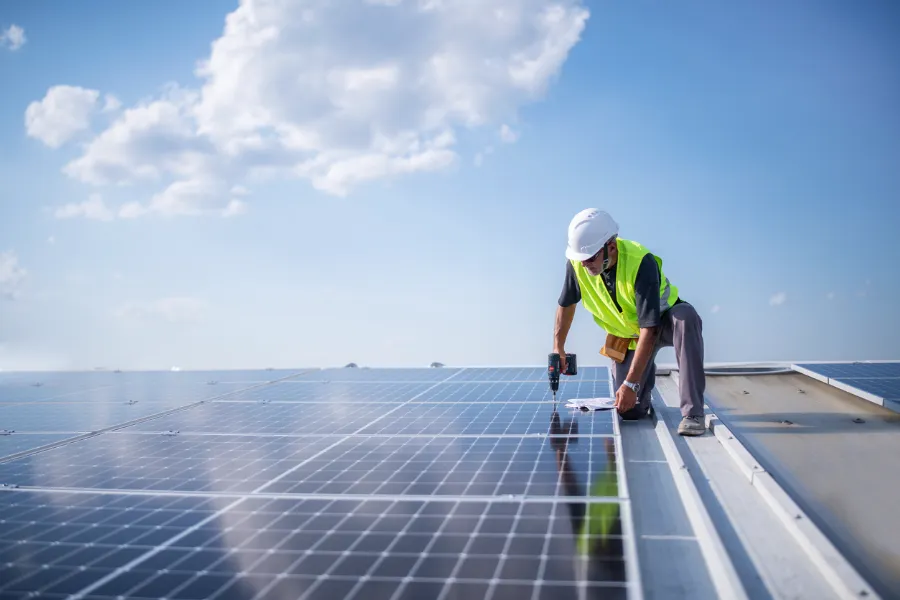
Cutting energy costs and reducing your tax bill at the same time sounds almost too good to be true. Yet for UK businesses investing in commercial solar, that is precisely what is on the table. Solar PV systems qualify for capital allowances for solar panels under HMRC rules, meaning the installation cost can be offset directly against taxable profits. This practical guide breaks down exactly how these incentives work, who qualifies, and what the real financial impact could be for your business.
Capital allowances are a form of tax relief that allow businesses to deduct the cost of certain qualifying assets from their taxable profits. Rather than treating the expenditure purely as a capital outlay, HMRC permits businesses to write down that cost against the income the asset helps to generate. When it comes to capital allowances on solar panels, the key classification is plant and machinery.
Solar PV systems are generally treated as plant and machinery under HMRC guidance, which is what makes solar panels and capital allowances such a valuable pairing for commercial operators. This means the installation cost can be deducted from taxable profits, reducing the amount of corporation tax owed.
For businesses exploring solar PV capital allowances for the first time, understanding this classification is the essential starting point.
The Annual Investment Allowance [1] is, in most cases, the most straightforward route to claiming capital allowances for solar panels. It allows businesses to claim 100% tax relief on qualifying plant and machinery in the year the expenditure is incurred, rather than spreading the deduction across several years.
The current AIA limit sits at £1 million per year, according to HMRC guidance, and solar PV installations that qualify as plant and machinery typically fall within its scope. In practical terms, this means a business can deduct the full installation cost from taxable profits in that financial year.
To illustrate: a business investing £60,000 in a commercial solar system could reduce its taxable profit by £60,000 in the same year, assuming the business stays under the £1 million AIA cap and has no other exceeding claims. This example delivers meaningful solar panels capital allowance savings at the point they are needed most.
Beyond the AIA, some energy-saving technologies may qualify for enhanced relief through first year allowances, which also provide 100% tax relief in year one. Capital allowances for solar panels accessed through this route are specifically designed to encourage businesses to invest in low-carbon technologies, rewarding early adoption with an immediate and full deduction.
The eligibility criteria for solar panel first year allowances can be more specific than those for the AIA, and whether a particular system or component qualifies will depend on how the equipment is classified under current HMRC tax guidance.
It is worth confirming the precise classification of your installation before assuming FYA applies, since the rules around energy technology lists and qualifying criteria have evolved over time. Speaking with a tax adviser at an early stage can help ensure you claim the most advantageous route available.
VAT is another area where commercial solar buyers stand to benefit, though the rules differ from capital allowances on solar panels and it is important not to conflate the two. Commercial solar installations are typically subject to the standard 20% VAT rate, but for VAT-registered businesses, this does not necessarily represent an added cost.
VAT-registered businesses can generally reclaim the VAT paid on a commercial solar installation as input tax through their normal VAT return, provided the system is used for business purposes. This contrasts with domestic installations, where VAT treatment and reclaim eligibility differ.
When solar PV capital allowances and reclaiming of VAT are considered together, the effective upfront cost of a commercial system can be reduced quite considerably, improving both cash flow and the overall investment case.
Capital allowances for solar panels provide immediate tax relief in the year of installation, which is what sets them apart from relief mechanisms that spread deductions over time. Under the AIA, businesses can deduct 100% of qualifying solar PV costs (up to £1 million) from taxable profits in the installation year, reducing the effective net cost from the outset.
When capital allowances on solar panels are combined with ongoing reductions in electricity spend, the overall return on investment strengthens considerably, and payback periods for commercial systems often fall within four to six years.
The numbers illustrate this clearly. For an £80,000 solar system, an £80,000 deduction at the 25% corporation tax rate (applicable for profits over £250,000 in 2026) yields a tax saving of £20,000 in that financial year. Energy savings from self-consumed power and any income through the Smart Export Guarantee [2] further accelerate that return.
It is worth noting that these figures assume full AIA availability and sufficient taxable profits; businesses with profits between £50,000 and £250,000 may be subject to marginal relief, and payback timelines will vary depending on location, energy usage, and the specific solar panels and capital allowances route taken.
The wider financial benefits include:
One of the encouraging aspects of capital allowances for solar panels is that eligibility extends across a broad range of business types. Capital allowances on solar panels are not reserved for large corporations; smaller businesses and sole traders can benefit too, provided the solar system is used for business purposes.
Businesses that may be eligible to claim solar panels and capital allowances include:
The central qualifying requirement is that the solar PV system must be installed and used for business purposes. Systems installed on commercial premises that are wholly or partly used for private purposes may be subject to different treatment, which is another reason why professional advice is valuable before you proceed.
While the general principles around capital allowances for solar panels are well established, the precise tax treatment in your specific situation can vary depending on several factors. Business structure plays a role, as the rules differ between limited companies, partnerships, and sole traders in certain circumstances. The financing model matters too: whether you purchase a system outright, use asset finance, or enter a lease arrangement can affect how and when capital allowances can be claimed.
Ownership of the solar system is another consideration, particularly where landlords and tenants share a commercial property. The accounting treatment adopted by your business will also influence how the relief is applied.
For these reasons, it is strongly recommended that you speak with a qualified accountant or tax adviser before committing to an installation, to confirm eligibility and identify the most advantageous claiming strategy.
Understanding the tax benefits is only part of the picture. The next step is finding a trusted, accredited installer who can deliver the right system for your business at a competitive price.
At Go Solar Compare, we make that process straightforward: use the simple quoting tool on our website, and we will match you with fully accredited solar installers, providing free, no-obligation quotes so you can compare your options with confidence. With capital allowances for solar panels potentially reducing your upfront costs significantly, there has never been a better time to explore what commercial solar could do for your business.
[1] GOV.UK, “Annual Investment Allowance”: https://www.gov.uk/capital-allowances/annual-investment-allowance
[2] Ofgem, “Smart Export Guarantee”: https://www.ofgem.gov.uk/environmental-and-social-schemes/smart-export-guarantee-seg


2026 © Go Solar Compare