
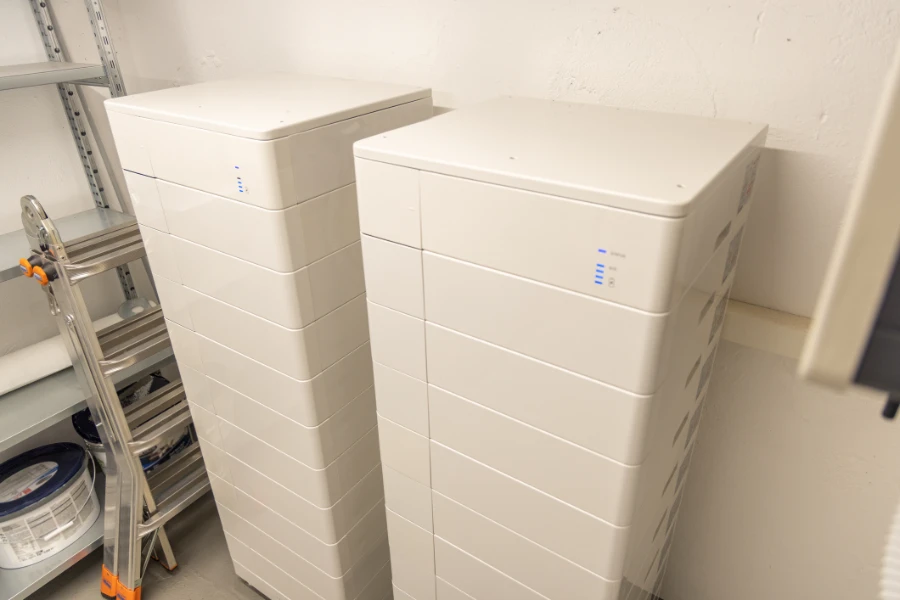
Many commercial solar systems generate more electricity than a business actually uses during the day. Production peaks at midday, while demand often peaks earlier in the morning or later in the evening, leaving a gap between when the energy is made and when it is needed. Commercial solar battery storage closes that gap.
Instead of exporting unused electricity back to the grid, businesses can store it and draw on it later, improving energy independence and reducing reliance on grid supply. This guide explains how commercial solar battery storage works in practice, what it costs, and whether it makes financial sense for your business.
Commercial solar battery storage is a system that captures surplus electricity generated by solar panels and stores it for later use, rather than letting it go to waste or exporting it at a low rate. That stored energy can then power a building during evening hours, during periods of low solar generation, such as overcast days, or during peak energy pricing periods when electricity from the grid is most expensive.
For businesses seeking a broader introduction to the components involved, our guide to solar batteries and inverters explains how they work together. In short, commercial solar storage gives a business more control over when it uses the electricity generated by its own panels.
Battery storage integrates with an existing commercial solar installation through a straightforward process. Solar panels generate electricity throughout daylight hours, and the building draws on this power immediately to meet its current demand. Any electricity produced beyond what the business is using at that moment becomes surplus, and rather than exporting it to the grid, it is directed into the battery instead.
Once solar production drops, whether in the evening, on a cloudy day, or overnight, the building switches to drawing on stored electricity rather than buying it back from the grid. The same principle applies to domestic and industrial solar battery storage: it allows a business to make fuller use of the electricity it has already generated.
Good news for businesses with variable working hours or shift patterns, as this kind of battery storage for commercial buildings can meaningfully increase the amount of solar energy actually consumed onsite, rather than sold back at a lower rate than it costs to import.
A well-specified battery system can offer several practical advantages for commercial premises, considering commercial solar battery storage.
These advantages include:
These benefits will not apply equally to every business, which is why it is worth understanding the cost involved before deciding whether storage suits your premises.
Commercial solar battery costs vary considerably depending on the scale and complexity of the system. A small battery suited to a modest office or retail unit will sit at a very different price point from a large industrial solar battery storage system designed for a warehouse or manufacturing facility with substantial energy demand.
Several factors influence the final cost, including the battery’s capacity in kilowatt-hours, the complexity of installation at your site, whether the battery is compatible with your existing inverter, and the sophistication of the included monitoring and control systems.
As a general guide, costs for solar batteries for commercial use can range from several thousand pounds for smaller systems to significantly higher figures for large-scale industrial installations. Getting a tailored quote based on your premises and energy usage is the most reliable way to understand what a system would cost for your business specifically.
Creating a commercial solar battery storage setup changes the financial picture of the installation, and not always in a straightforward way. The upfront cost of the overall system increases, and in some cases, this can extend the payback period compared to a solar installation without storage.
However, the picture improves considerably for businesses that operate during evening hours, face high electricity tariffs, or generate large amounts of solar electricity that would otherwise go unused during the day. In these circumstances, storage allows a greater proportion of self-generated electricity to offset costly grid imports, which can meaningfully improve the commercial solar battery cost equation over the system’s lifetime.
Before committing to storage, businesses should look closely at their own energy usage patterns. A facility that operates mostly during daylight hours when solar generation is highest will see less benefit from storage than one with significant demand after the sun has set.
Storage tends to deliver the strongest results for certain types of commercial operations, and identifying whether your business fits this profile is a useful step before investing in commercial solar storage.
Battery storage would make sense for:
Larger facilities with substantial and consistent energy demand, such as manufacturing sites or distribution centres, often see stronger benefits from commercial battery storage solar than smaller premises with lighter or more occasional usage.
There is no single answer that applies to every business. Commercial solar battery storage can offer genuine operational benefits, including greater energy flexibility and reduced exposure to peak electricity pricing, but it is not necessary for every commercial solar installation. The right decision depends on a combination of factors specific to your premises, such as your energy usage patterns throughout the day, the size of your existing or planned solar system, the structure of your electricity pricing, and the export tariffs available to you.
Solar batteries for commercial use suit some businesses far more than others, and the only reliable way to know where your business sits is through a proper assessment of your energy profile. A professional solar assessment can weigh up these factors and give you a clear, honest answer rather than a generic recommendation.
If you are weighing up whether commercial battery storage solar is right for your business, comparing quotes is a sensible next step. Go Solar Compare connects you with MCS-accredited installers who can assess your energy usage and advise on the right system for your premises, with no obligation to proceed. Explore solar solutions designed to maximise energy savings for your business and see what is available to you.


2026 © Go Solar Compare